
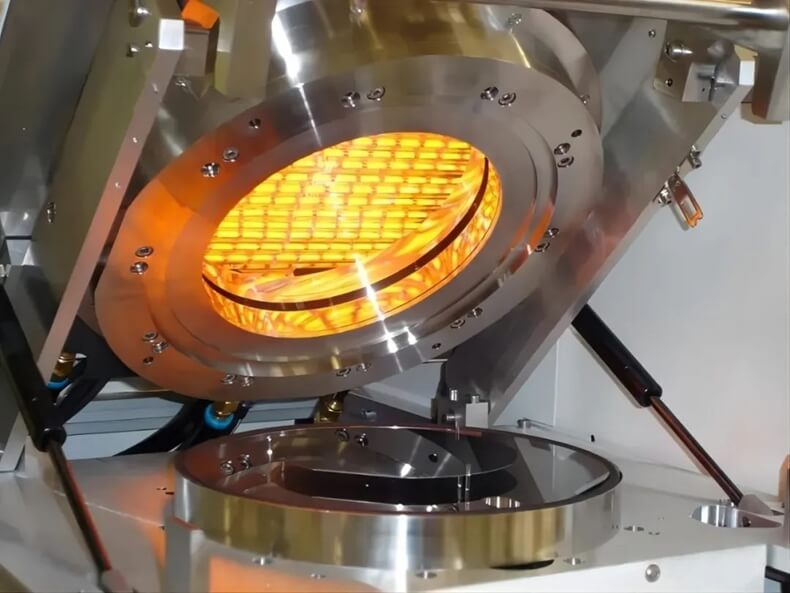
On the lithography floor, you learn fast that a soft bake drifting even half a degree throws CD bias out of spec. And if the hard bake runs hot across the edge, you’ll see scumming that kills inspection. Wafer heating isn’t some background step. It sets the thermal budget for every layer you pattern. When uniformity falls apart, you don’t ship die — you spend your day chasing excursions. What matters, technically We build wafer heating around controlled infrared sources—short-wave and medium-wave—paired with quartz-halogen elements for stable, fast response. The spec that actually matters is repeatable uniformity: ±0.1°C across the wafer plane during the photoresist bake. Cleanroom compatibility is table stakes, so the assembly is rated for Class 1–100 environments with zero particle generation and low outgassing. The system runs 24/7 with monitored lamp health, tight power regulation, and thermal drift compensation, so the setpoint is the temperature you get, not a hope and a prayer. Here’s the payoff: you run soft bake and hard bake with the same thermal profile, and the tool holds it cycle after cycle. That kind of consistency cuts CD variation, trims rework, and protects yield. Energy use drops because the lamps heat on demand with minimal thermal mass, and the lower maintenance load keeps the scheduler moving instead of idling. In high-volume fabs, stable heating translates straight into fewer line stops and a lower cost per wafer. A few realities to plan for. The system needs a stable supply voltage and proper heat management at the lamp interface; voltage ripple shows up as temperature jitter. Installation tolerances are tight because alignment directly affects the illumination profile and, in turn, uniformity. Plan the footprint early—retrofits can be compact, but airflow and shielding have to be respected to keep particle performance where it needs to be.