
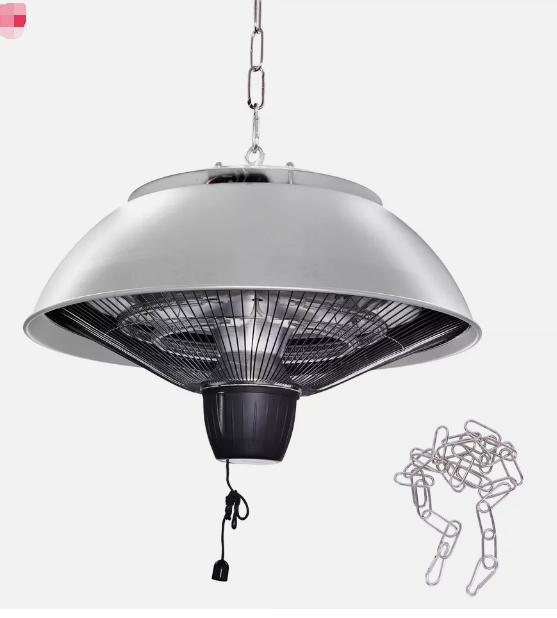
How to pick the right infrared heater for your bathroom
Let’s be honest: nobody likes stepping out of a hot shower into a freezing bathroom. It’s the worst part of the morning. If you’re looking at infrared heaters to fix this, you can’t just grab any unit off the shelf. You have to get the power right, or you’re just wasting money. First thing’s first: safety. Since bathrooms are basically steam rooms, you need a heater with anIP44 rating. It’s a technical term, but all it really means is that the internals are sealed up tight. It keeps splashes and damp air from causing a short circuit. Non-negotiable.
Getting the wattage right
You don’t want to overkill it. If you’ve got a tiny powder room (under 4m²), a small 250W to 400W lamp is plenty. If you put a massive heater in a tiny space, you’ll end up feeling like you’re in a sauna, and your electric bill will show it. For your standard medium-to-large bathrooms (6m² to 12m²), go for something in the 600W to 800W range. But here’s the thing: if your ceilings are huge or your walls are drafty, one heater might not cut it. You might need to install a couple of units to make sure the warmth actually reaches you.
How this actually works
These heaters use shortwave infrared. Most heaters try to warm up the air in the room, which takes forever. These are different. They beam heat directly onto you and the surfaces around you. It feels like stepping into sunlight. You feel the warmthinstantly, even if the air in the room is still chilly. We use quartz glass for the tubes because it can handle the heat without cracking. Just be careful where you put them. Mount them too low, and you’ll practically cook yourself. Mount them too high, and the heat disappears before it ever hits the floor. There’s a sweet spot.
A quick warning on your wiring
More wattage means faster heat, but it also puts more stress on your electrical panel. Before you go crazy with multiple 800W units, check your wiring. If your circuits are old or undersized, you’ll trip the breaker the second you flip the switch. It’s a huge pain to fix after the walls are closed up, so double-check your load calculations first.